

Self -Sufficiency Is Not A Scam
and changing for the sake of change is not so smart.

Gosh, it’s been a while.
Late Lambers
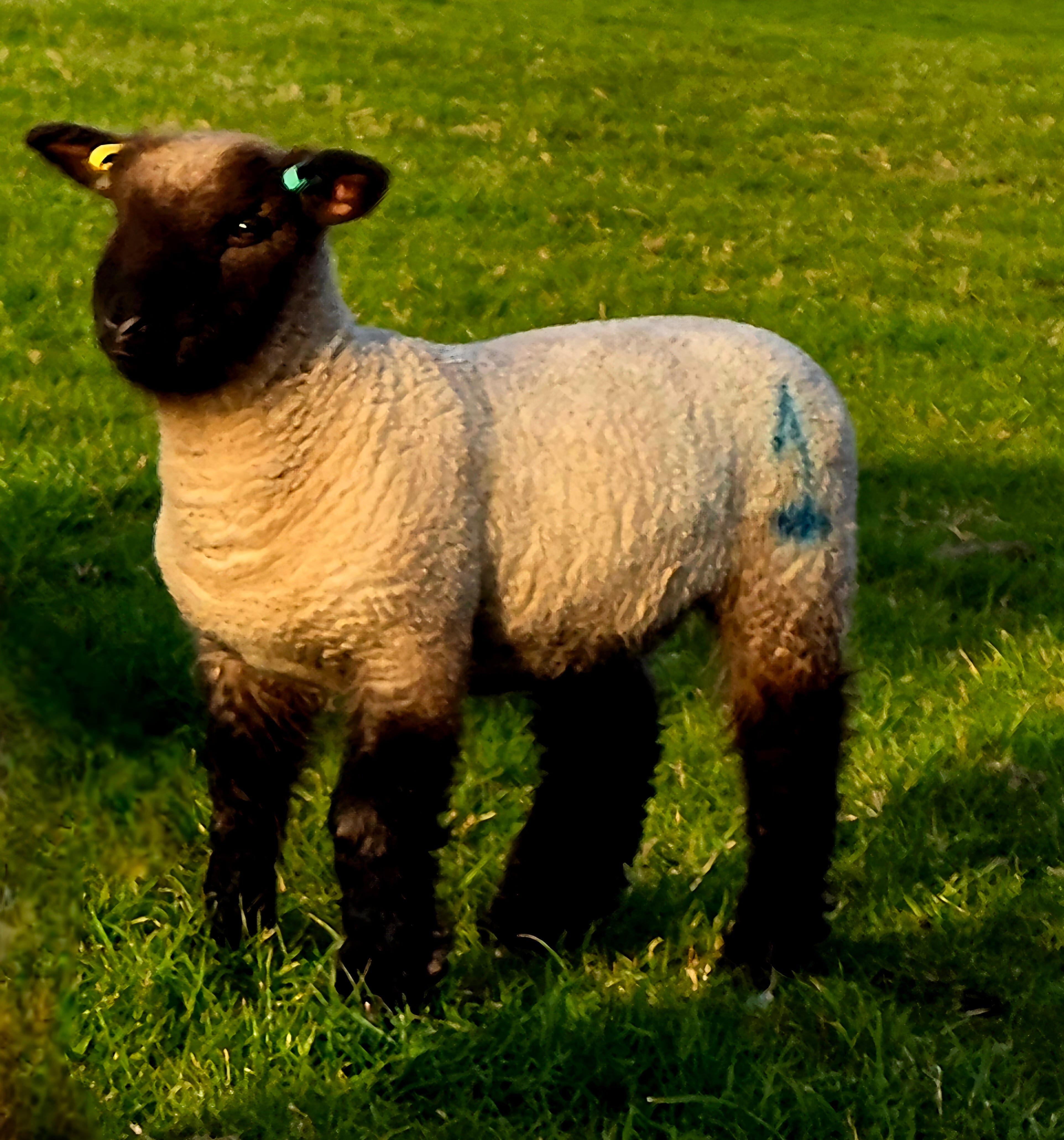
All the late lambers have now late lambed. On Darcy’s due date we removed her prolapse harness and awaited problems, but no, upon our next visit she had efficiently birthed twin ewes, washed them, fed them, and put them to bed, and no internal parts of Darcy were visible. Go figure.
The other two lambed in due course, a ewe lamb and a ram lamb, leaving only Hilda (after Hilda Pierce, obviously, fellow Foyle’s War aficionados) who had returned so was due a couple of weeks later. The weather at that point was sunny and blissful and while we were deciding what to do about her, she had twins, one of each, in the field one sunny morning and that solved that dilemma.
I had put the entire flock up for sale, hoping to embark on a fleece flock venture, but I am back tracking, I think. Maybe stop starting new things and pursue existing things? Of which more later.
The Weather Though
I know it’s a cliché, the British and the weather, but honestly?
Firstly, it rained for about six months, the entire field was a swamp, Stan and Ollie were driving the Mad Max thing round and round, creating battlescapes like they had nothing better to do. Eventually, just as they left, it stopped raining, the sun came out, and the ground started to bake hard, complete with the tracks, and the ruts, and the compressed slabs. It stopped raining, and it meant it. It didn’t rain for a month or more. The vegetable garden is dust or concrete depending on whether it had been turned over before the spring drought arrived.
Somewhere in the middle, we did have a dry desert wind which destroyed the cheap gazebo that was my only shade down there, but mainly, it was basically July for most of April.
Along come the darling buds of May and hurrah, they are murdered by late frosts. When it rains for half an hour, it comes down disguised as hail. The temperatures have absolutely plummeted, nothing is growing. I am fleecing tomato plants which are desperately waiting for us to recover the polytunnel, which in turn is desperately waiting for enough rain to make the ground around it diggable. We have given in and hired a guy with a digger for tomorrow.
Yesterday, it rained again (this rain is of a mystical variety that somehow seems to not actually make the soil wet, or any less concrete) and with the rain came a roaring north westerly which has done a fair job of destroying the extremely expensive replacement gazebo.
Did I mention nothing is growing?
Self Sufficiency Is Not a Scam
I recently had an interesting conversation with a young woman who posts a lot on socials, an influencer if you will, who has gone from basically travel/van life vlogging to living in one place and doing a bit of self-sufficiency stuff.
Now, this person has had a lot of pushback in her comments from people parroting the latest mantra of a certain group of people ‘SELF-SUFFICIENCY IS A SCAM’. If you know, you know. Basically, a few very high profile folks on the socials who are community based.
Now firstly, although it’s a catchy hook, they basically don’t mean it’s a scam. They mean it’s an illusion. What they’re saying is that if you try to be self sufficient, you’ll burn out, and this is to an extent true. Unless you’re happy to live on turnips and leaves, and without coffee and toilet rolls, you would be very hard put to be wholly self-sufficient.
Secondly, my heroes and role models, including of course the master of them all, John Seymour, never suggested that you could be wholly self-sufficient. He himself explained that he earned money doing radio work for the BBC and was, as a result, often absent from the farm at times when he would much rather have been present. The idea was to be as self reliant as possible.
Thirdly, I have to say that most of the shouty “SELF-SUFFICIENCY IS A SCAM” posse are about to either sell you something, or get you to work for them for free. The loudest shouters run communities which you can join for varying large recurring sums of money, which may or may not entitle you to buy food from them, and possibly attend their (sorry, your) land for a get together once or twice a year.
One particularly annoying ex-city big shot has set up a small farm which was going to be self sufficient, but, at the same time he realised that he and his partner couldn’t do all the work, as well as carry the burden of massive social media output, he mysteriously also discovered that ‘SELF-SUFFICIENCY IS A SCAM” and offers you the chance to learn about this by coming and camping on their land for a week or two and doing all the work for with them. Unpaid, of course. You’re learning how much of a scam self sufficiency really is. Hmmm.
I’m being particularly vitriolic about this one because, not long ago, he asked a question about tomato plants on his Instagram, and I replied with a decent video answer. His reply to me was, I kid you not: ‘they look very good.’ Thank you. I’ve been growing since you were in nappies, but of course, I’m a woman, and worse than that, an invisible, old, woman. The same day a male market gardener posted something he’d done and the same guy was up in the comments ‘F*CKIN CRUSHING IT MATE!!!” Now, in his mind (and, indeed, in his bio), he’s all kinds of reconstructed New Man (remember them?!) all about the planet and ‘community, mate’ but really? When it comes to it? Just the same old model we’ve been coping with for years. Sigh.
Anyway, back on topic. Self sufficiency is not a scam, it’s not even an illusion. It’s a catch all term used by those of us who espouse it and study its canon, to mean providing as much for oneself as it is possible to do in one’s individual circumstances.
Sometimes it means learning a skill which, for the time being, will have little or no relevance to your day to day survival, but you have learned it, and one day, should extreme circumstances arise, you will still know how to do it. For example, I can make sourdough bread. I don’t, because I am rubbish at remembering to do all the different bits at the right time, and for now, it suffices to make yeast bread, but if we ever find there is no yeast available, I shall know how. I can spin fleece into yarn, an enjoyable hobby, but unlikely at present to go far towards clothing me. In the extremely unlikely event that the SHTF and I survive longer than the enormous mountain of surplus clothing already on the planet, I will have that skill to hand.
A Course In Contentment
5. Question Every Change
Not so long ago, we were considering whether it would be possible for us to move house. We would both love to live somewhere less crowded, somewhere more beautiful and remote, by the sea or in the mountains. A lot of people would like to do that, I’m aware.
One of the things we had to ask ourselves was : supposing it’s possible, it will ‘cost’ a year at least, if not two, of our lives. I don’t mean to say we will die two years sooner! What I mean is, all progress on current projects will be on hold. Neil’s business is moveable, but it takes time. Supposing we moved two hours away, he would have to start pitching for work an hour away, then start working an hour away, and embracing the long travel time. Then when we moved, he’d have work that was still an hour away (in the opposite direction) and he’d have to slowly start to replace it with work that was closer to our new home. All of that takes months and during that time, robs you of all the travel time and costs.
We’d have to clear the field, sell all our livestock, hope we could find new land to rent, or maybe learn to live without land, in which case maybe we could get an allotment - though there’s usually a waiting list. The clearing of everything and everybody off our land would take at least a year of concentrated effort, and during that time we would probably not be growing or rearing food, we would just be enacting an exit strategy.
So aside from ‘do we want to move?’ we had to look at ‘are we prepared to pay the price in time, when we are at the narrow end of our useful lives?’
Recently, I’ve been forced to apply this same filter to other changes. Contentment, after all, implies - well, not change.
Why do I want to get rid of the sheep, and start again with a fleece flock? If I want other fleeces, I can buy them, or possibly even trade them, with people who have other breeds.( I could even have the odd fleece breed in with my pure breds, they’re not contagious!) Do I need to change breeds? The process will, in some ways, eat a year at least.
Would it not be more peaceful, more productive, and a better discipline, to keep the same breed, continue to improve our bloodlines, leave a name and a legacy, put a bit more effort into enjoying the breed, maybe go back to showing them?
This is a valuable module in my Course in Contentment. I must learn to spot myself lining up for a change which may be just for the sake of change. I must ask myself, am I ready to trade the time for this novelty, or would it be better to rest in what I have, what I know, and what I could do better, without upheaval?
It's ridiculous isn't it? I've got brassica seedlings which have been sat at the seed leaf stage for weeks!
I'm so very glad I don't wander the socials anymore...it's bad enough seeing the odd shouty thumbnail on YT....a scam, you say? I do, however, remember enough of the socials to have a little giggle at your response to the Influencer™ types.
As always full of parallel musings and ponderings. I'm just nearing the end of Against the Machine (the hold queue at the library was about seventy people deep so I've been waiting a while to get my mitts on it)....some interesting food for thought and I was thinking of you while reading.
Congrats on a successful lambing season! xo